When to Leave the Spreadsheet Behind (And What to Use Instead)
You know that spreadsheet? The one with fourteen tabs, three color codes only you understand, and a formula you're afraid to touch... Remember how it worked, until it didn't?
Listen, I’ve watched this happen with course launches, community builds, and signature programs alike. It's almost as if the system that got you started is the same one now quietly slowing you down... There's no need to feel shame or discomfort, silently avoid it all, or even force it to work. It's okay admitting that you need a change! So if the spreadsheet finally cracked because you outgrew it, then you're in the right place.
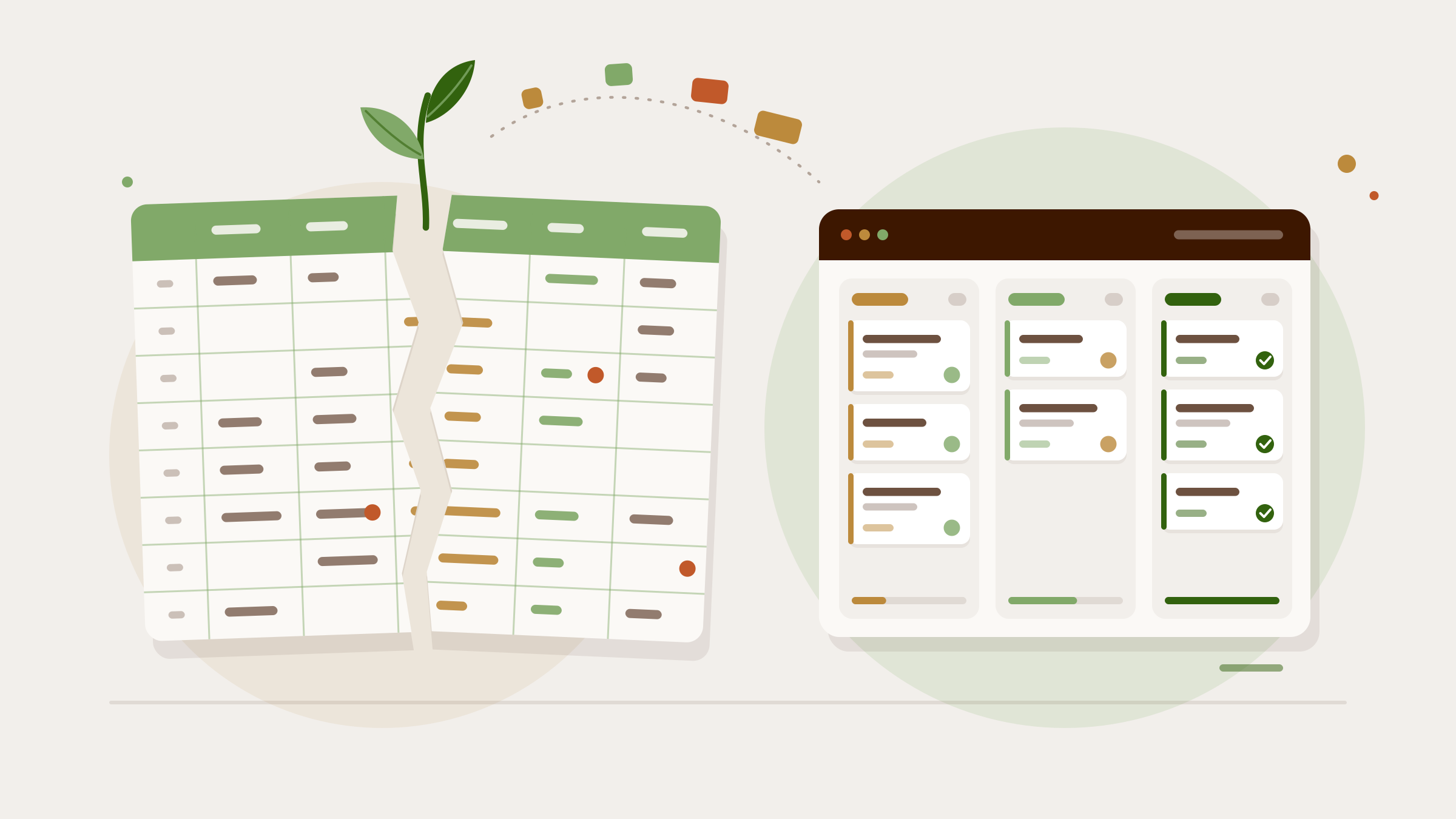
The Signs it's Actually Time
Here's the thing about a spreadsheet: it's brilliant at holding information and terrible at holding a project. Somewhere along the way those two things stop being the same job, and most founders don't notice until they're already behind. Here are a few signs it's happened to you:
You're the only one who can update it. If your VA, your assistant, or your future team member would need a twenty-minute tour just to move a task, the spreadsheet has become a bottleneck instead of a system.
The real deadlines live in your head, not in the document. The cells say one thing, but you know the launch date actually depends on three other things that aren't written down anywhere.
You're duplicating the same information in three places—the spreadsheet, a notes app, and a running mental list—because none of them alone feels trustworthy anymore.
Any one of these on its own isn't a crisis... Put all three together, and it usually means the tool has quietly become the thing you're managing, instead of the thing helping you manage.
What Actually Changes When You Switch
This isn't about getting fancier software for the sake of it. A real project management tool does three things a spreadsheet structurally can't: it shows dependencies (what's actually blocking what), it gives visibility to anyone else involved without a walkthrough, and it takes the "remembering" part out of your hands and puts it into the system instead. That last one is the quiet relief nobody mentions. It's the part where you stop being the human backup for your own plan.
How to Choose Without Overbuilding It
You do not need an enterprise-grade system to launch a course, a community, or a signature program. You need three things:
A place to see every task and its owner.
A place to see what's due when.
A place that doesn't require you to be the only one who knows how it works.
Free and low-cost tools like ClickUp, Monday, Asana, Trello, etc. can absolutely do this. The goal is a system sized to the actual project, not a system sized to impress someone.
A Simple First Step that Goes a Long Way
Before you commit to a whole new platform, try this: Take your current spreadsheet and map just the next two weeks of it onto a simple board—one column for "not started," one for "in progress," and one for "done." If that alone makes things more clear, you already have your answer.
Whatever you decide, take it at a pace that actually works for you and your team. The goal is to build something you can trust and keep for the long haul.
Ready to see exactly where your project actually stands? Check out our free Kickoff Scorecard—it's a 5-minute tool that shows you where things stalled and what's really in the way before you build the next step. Take me to the scorecard!
From our founder:
Sign up for our newsletter! It's where I share the stuff that doesn't make it to the blog. You'll get the real behind-the-scenes, the lessons before they're polished into a post, and the news you'll hear from me first. Every once in a while, I'll drop a perk or a freebie in there before anywhere else. If that sounds like your kind of insider access, join the newsletter.



How to Make Your Business Run Without You, One Automation at a Time
Wildiah Edouard Published on: 19/10/2026Make your business run without you, one automation at a time. A free 3-part series of step-by-step automations you can set up yourself.